
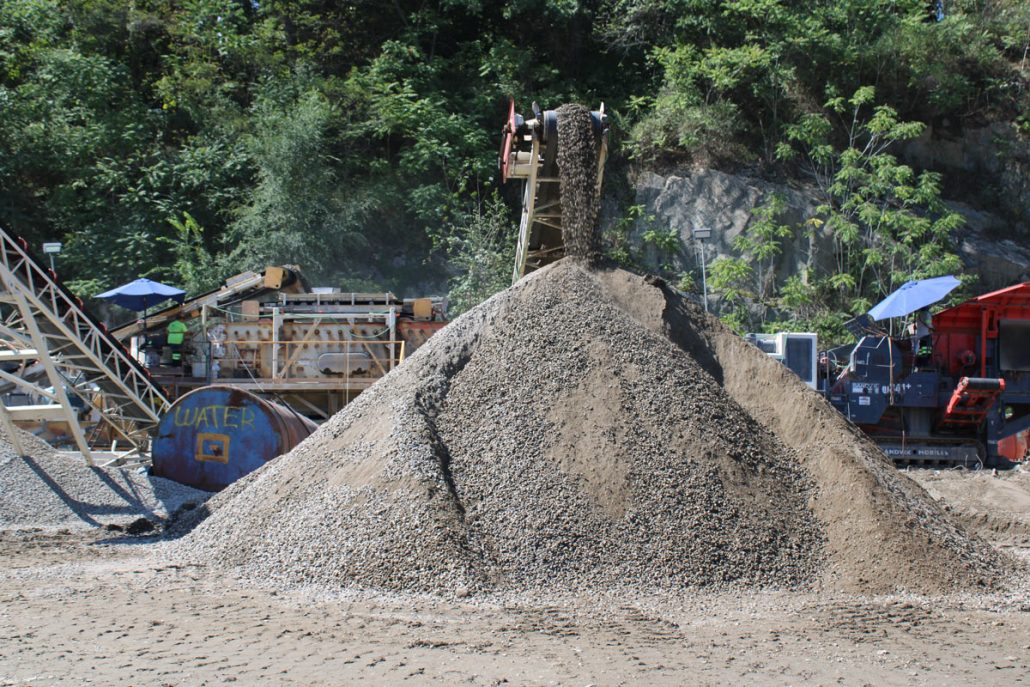
What happens when an old bridge, building, or highway reaches the end of its life? In the past, that concrete was destined for a landfill. Today, it’s one of Thalle Industries’ most valuable resources.
Recycling concrete isn’t just about being “green,” it’s about creating a circular economy that saves energy, reduces mining, and provides high-quality materials for the next generation of infrastructure. Here is how Thalle Industries turns yesterday’s demolition into tomorrow’s foundation:
The Step-by-Step Recovery Process
1. Collection and Sorting
The process begins at the demolition site. Heavy machinery breaks the concrete into manageable chunks. This “raw” rubble is then inspected to remove large contaminants like wood, plastic, or trash that might have been part of the original structure.
2. Primary Crushing
The rubble is fed into a large industrial crusher (usually a jaw or impact crusher). This machine exerts massive pressure to break the large slabs into smaller, uniform pieces.
3. Metal Extraction
Concrete is often reinforced with steel rebar. During the crushing stage, powerful industrial magnets are used to “pluck” the metal out of the stream. This steel is then sent to metal recyclers, ensuring nothing goes to waste.
4. Secondary Screening and Sizing
The crushed material is passed through a series of vibrating screens. This separates the material by size, ranging from fine manufactured sand to larger 1-inch or 2-inch aggregates.
5. Washing and Final Quality Control
The final step involves cleaning the aggregate to remove dust and any remaining debris. We then test the recycled aggregate for strength and durability to ensure it meets the same rigorous standards as virgin stone.
Where Does it Go Next?
Once processed, this Recycled Concrete Aggregate (RCA) is ready for its second act. It is commonly used as:
- Sub-base material: The critical stabilizing layer under new highways.
- Erosion Control: Large chunks (rip-rap) used to protect shorelines and embankments.
By choosing recycled materials, our customers are protecting the landscapes we call home.